
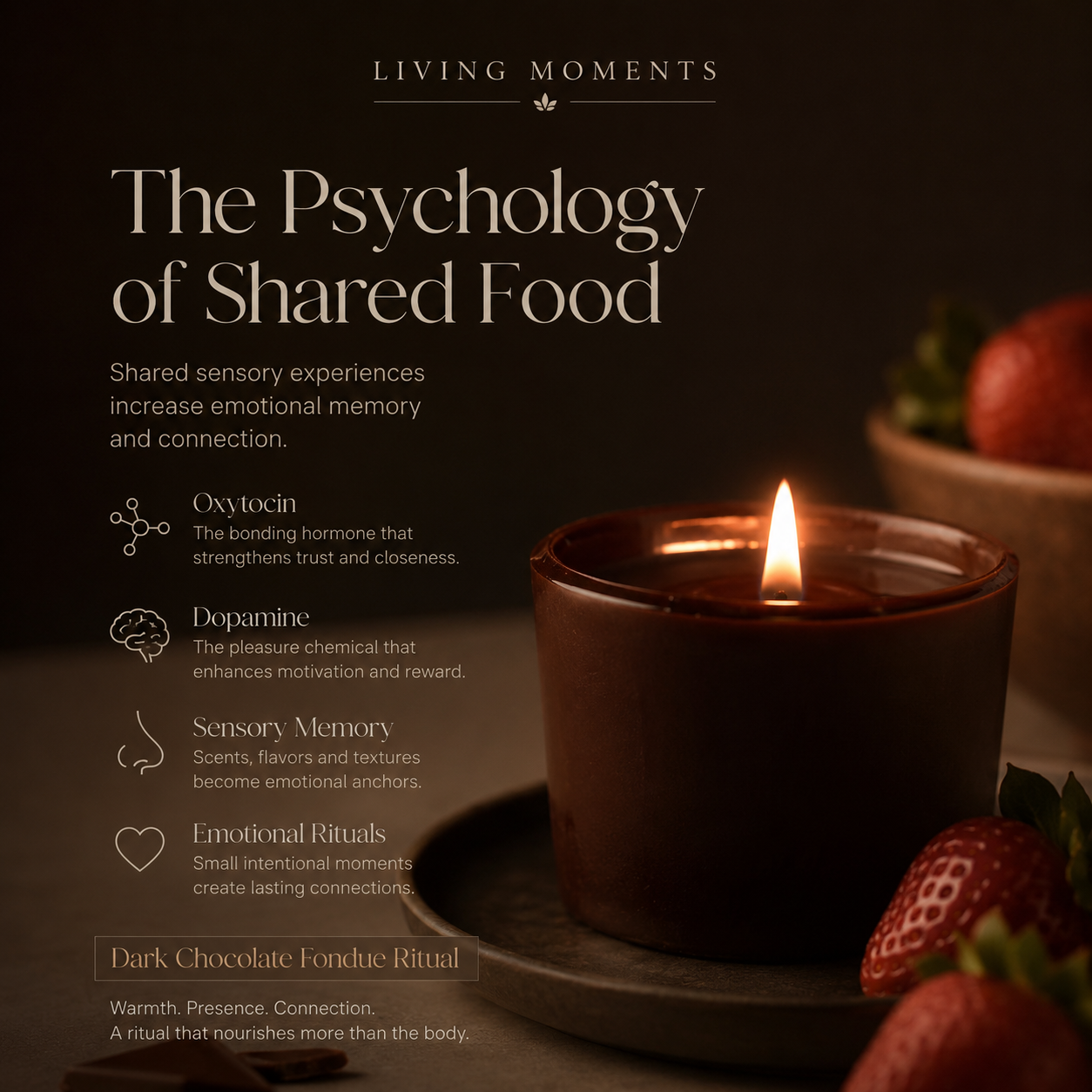
Why do some of our deepest memories happen around a table?
A late-night dessert.
Warm chocolate shared slowly.
Tea after an emotional conversation.
A candlelit dinner that somehow felt unforgettable even though nothing extravagant happened.
Food has always been more than nourishment.
Psychologically, emotionally, and biologically, shared eating experiences create powerful forms of human connection. Long before modern life became fast and overstimulated, people gathered around meals to feel safe, connected, and emotionally close to one another.
And even today, the nervous system still responds to these rituals in deeply human ways.
Because sometimes intimacy begins with something as simple as slowing down enough to eat together.
Why Eating Together Creates Emotional Connection
Modern relationships often struggle with distraction.
People eat while scrolling.
Talk while multitasking.
Rush through meals without fully experiencing them.
But the human brain forms stronger emotional memories when multiple senses are activated at the same time.
This is called sensory memory — the process where smell, taste, texture, lighting, sound, and emotional atmosphere become connected to a specific experience.
That’s why certain foods instantly remind us of people, places, or feelings years later.
The aroma of melted chocolate.
The glow of candlelight.
The sound of soft music in the background.
The warmth of sharing dessert with someone you love.
The brain stores these moments emotionally, not just logically.
And shared sensory experiences often strengthen emotional bonding far more than people realize.
The Science Behind Shared Food Rituals
When people share comforting experiences together, the body releases chemicals associated with emotional connection and pleasure.
Oxytocin — The Bonding Hormone
Oxytocin is often called the “love hormone” because it plays a major role in trust, attachment, emotional safety, and social bonding.
Slow, emotionally safe experiences — especially those involving closeness, eye contact, touch, and shared rituals — can support oxytocin release.
This is one reason intimate meals often feel emotionally comforting.
Not because of the food alone,
but because of the emotional environment surrounding it.
Dopamine & Emotional Pleasure
The brain also releases dopamine during pleasurable sensory experiences.
Warm chocolate,
comforting flavors,
anticipation,
novelty,
and emotionally positive moments can all contribute to dopamine activation.
Dark chocolate in particular contains compounds associated with pleasure, comfort, and emotional wellbeing, which is one reason chocolate rituals feel so universally comforting across cultures.
And when pleasure becomes associated with a person or experience, emotional memory deepens even more.
Why Rituals Matter More Than Perfection
What many couples are truly craving is not luxury.
It’s emotional presence.
Rituals create predictability, safety, and connection for the nervous system. Even small intentional moments can become emotionally meaningful when repeated with care.
Lighting candles before dessert.
Preparing fondue together.
Sharing strawberries slowly.
Sitting without phones.
Talking without rushing.
These moments communicate something deeper than words:
“I’m here with you.”
And in a world full of overstimulation and emotional disconnection, that feeling becomes incredibly powerful.
The Dark Chocolate Fondue Ritual
There’s something uniquely intimate about warm chocolate shared slowly.
A dark chocolate fondue ritual naturally combines multiple sensory experiences at once:
- warmth,
- aroma,
- taste,
- texture,
- candlelight,
- conversation,
- physical closeness.
The nervous system responds to these environments by softening.
People breathe slower.
Conversations deepen.
Attention becomes more present.
And what begins as dessert quietly transforms into emotional connection.
Especially when paired with intentional rituals like the Natural Ser edible chocolate candle fondue — where candlelight and chocolate become part of the same sensory experience.
Because sometimes the most meaningful form of romance is not intensity.
It’s the feeling of being emotionally safe enough to slow down together.
Maybe That’s Why We Remember These Moments Forever
Not because they were extravagant.
But because we were fully there.
Fully tasting.
Fully listening.
Fully feeling.
And maybe that’s what creates lasting intimacy in the end:
small rituals experienced with presence.
