
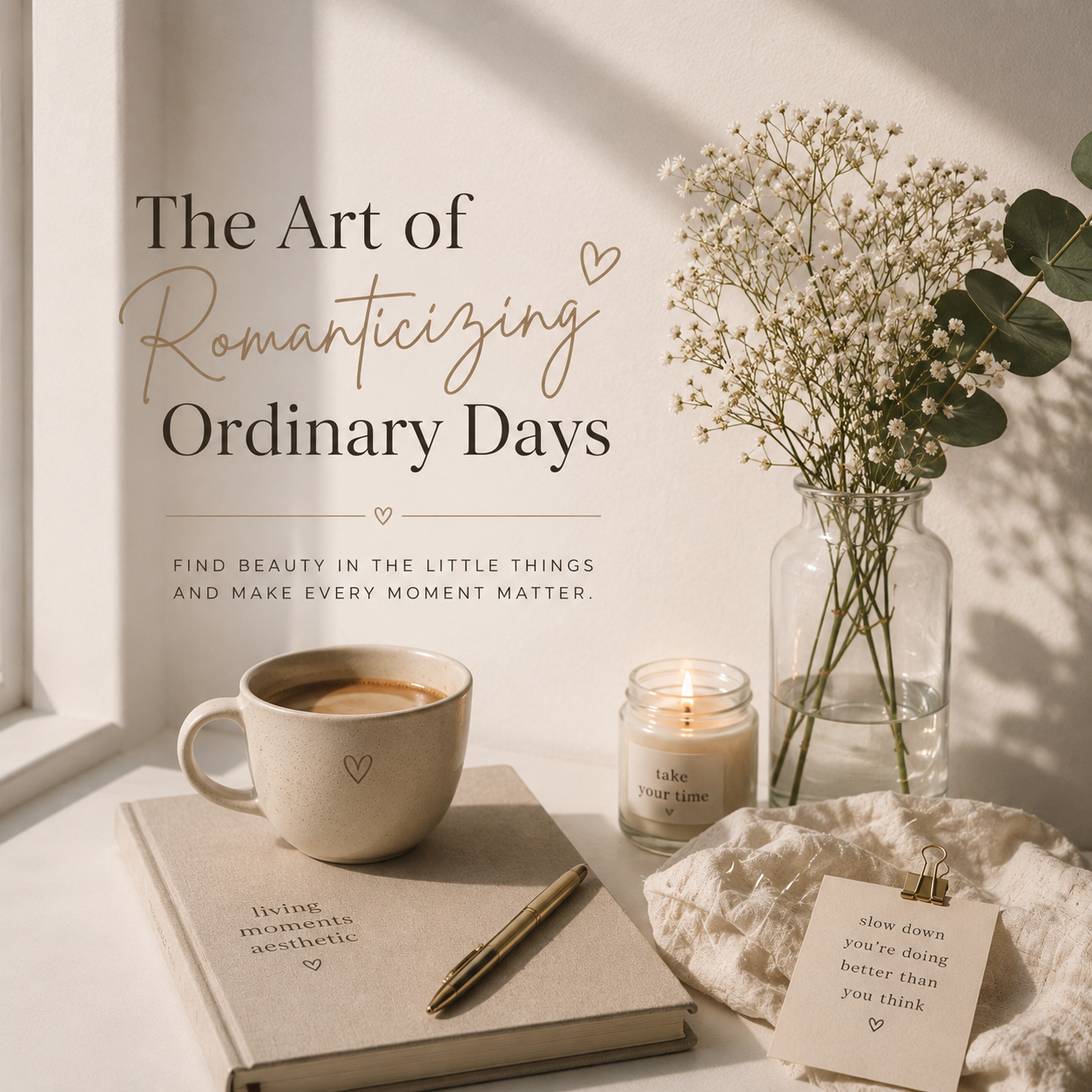
There is something beautiful about learning how to slow down enough to notice your own life again.
Not the big milestones.
Not the dramatic moments.
Not the perfectly curated versions of happiness.
Just ordinary life.
The quiet mornings.
The smell of coffee.
The soft light entering the room.
A favorite song playing in the background.
Candles burning while the world outside feels cold and rushed.
For a long time, I thought beautiful moments only existed inside extraordinary experiences.
Travel.
Achievements.
Big changes.
New beginnings.
But slowly, I realized something much softer:
life is mostly made of ordinary days.
And maybe happiness depends on learning how to make those days feel meaningful too.
Creating a Home Feeling Everywhere
One of the inspirations behind the idea of the Living Moments Candle Shop came from this exact feeling:
the desire to create warmth emotionally, not only aesthetically.
Because atmosphere changes the way we experience life.
A candle is never just a candle.
It becomes:
comfort after a difficult day,
a slow winter evening,
a peaceful morning routine,
a memory attached to a certain season of life,
a feeling of home.
And psychologically, scent is deeply connected to emotion and memory.
Why Scent Feels Emotional
Neuroscience shows that smell is directly connected to the limbic system — the part of the brain strongly associated with emotion, memory, and emotional processing.
This is why certain scents can instantly transport us emotionally:
fresh coffee reminding you of childhood mornings,
vanilla bringing feelings of comfort,
lavender creating calm,
rain reminding you of specific memories,
candles making a space feel emotionally safe.
Researchers often describe scent as one of the strongest emotional memory triggers humans experience.
We do not only remember smells.
We remember the emotions attached to them.
That is why creating intentional spaces matters more than people realize.
Your environment shapes your nervous system.
Romanticizing Life Is Not Escaping Reality
Sometimes people misunderstand the idea of romanticizing life.
They assume it means pretending everything is perfect.
But real romanticizing is not denial.
It is presence.
It is learning to notice beauty while life is still imperfect.
A warm drink during winter.
A clean room.
Music while organizing your space.
Fresh sheets.
Books stacked beside the bed.
Candles at night.
Soft lighting instead of harsh brightness.
Cooking slowly instead of rushing constantly.
These moments may seem small.
But emotionally, they create grounding.
And grounding matters in a world that constantly overstimulates the nervous system.
Slow Mornings Change Everything
Modern life teaches people to wake up already anxious.
Check notifications immediately.
Rush.
Consume information.
Start the day emotionally overstimulated.
But slower mornings create a completely different emotional atmosphere.
Even simple rituals can regulate the nervous system:
- making coffee slowly
- opening windows for natural light
- listening to calm music
- stretching gently
- journaling thoughts
- lighting a candle before starting work
- reading a few pages of a book instead of scrolling
These are not meaningless aesthetic habits.
Research on mindfulness and nervous system regulation suggests that intentional slow moments help reduce stress responses and improve emotional balance.
The body needs moments of softness too.
Books, Music, and Emotional Atmosphere
Books and music shape emotional environments in subtle but powerful ways.
Reading slows the mind down.
It teaches presence in a world addicted to speed.
And music has measurable psychological effects on mood, emotional regulation, stress levels, and even memory recall.
This is why certain songs feel nostalgic instantly.
Your brain stores emotion together with sensory experience.
Sometimes healing is not found in dramatic transformation.
Sometimes it is found in creating small moments where your body feels emotionally safe enough to breathe again.
Aesthetic Organization Is Also Emotional
People often think organization is only visual.
But clutter affects the nervous system more than most realize.
Research suggests highly chaotic environments can increase feelings of stress, mental fatigue, and emotional overload.
This does not mean life must look perfect.
It simply means intentional spaces affect emotional well-being.
A cozy room.
Warm lighting.
Clean sheets.
A peaceful corner to read.
Candles beside your notebook.
A favorite mug.
These things quietly communicate safety to the brain.
And sometimes creating external calm helps create internal calm too.
The Beauty of Ordinary Days
One of the saddest things modern culture has taught people is the belief that life only matters when something extraordinary is happening.
But most of life is ordinary.
And if we are always waiting for huge moments to finally feel alive, we miss the softness of everything happening now.
The quiet mornings.
The conversations.
The tea at night.
The walks.
The music.
The tiny rituals.
The moments nobody else sees.
Those moments are life too.
Maybe even the most important part of it.
Creating Rituals Instead of Escaping Life
Romanticizing ordinary life is not about buying more things or creating perfection.
It is about creating rituals.
Moments that slow you down enough to reconnect with yourself again.
Lighting a candle intentionally.
Making tea without rushing.
Listening to vinyl records at night.
Reading before sleep.
Organizing your room gently on Sunday mornings.
Allowing quietness to exist.
These rituals create emotional texture in life.
And over time, they become memories.
Final Reflection
Maybe the secret to a softer life is not constantly searching for extraordinary experiences.
Maybe it is learning how to fully exist inside ordinary ones.
To create warmth intentionally.
To notice beauty more often.
To slow down enough to actually feel your life while it is happening.
Because one day, the little things we barely noticed may become the moments we miss the most.
Reflection Quote
“A beautiful life is often built from beautifully ordinary moments.”
