
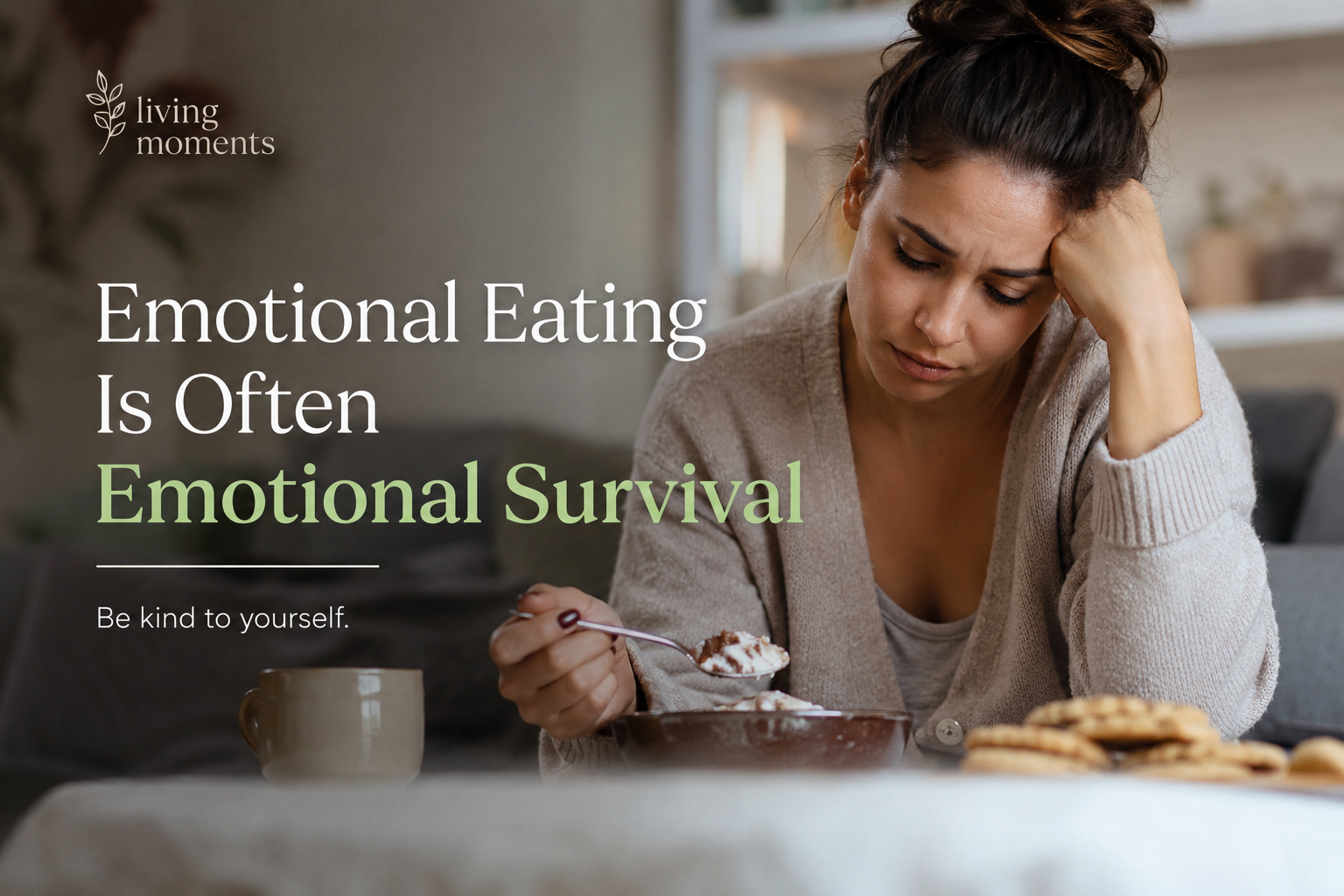
Not all hunger comes from the stomach.
Sometimes it comes from emotional exhaustion.
From anxiety.
Loneliness.
Stress.
Burnout.
Nervous system overload.
Or simply trying to make it through another overwhelming day.
Many people live carrying guilt around food without realizing that emotional eating is often the body searching for comfort, safety, relief, or regulation.
Not weakness.
Not failure.
Human survival.
Food Became Emotional Long Before We Noticed
Food is deeply connected to emotion, memory, comfort, and nervous system regulation.
The brain naturally seeks pleasure and relief during periods of emotional stress — especially when cortisol levels remain elevated for long periods.
This is why emotional eating often appears during:
- anxiety,
- emotional emptiness,
- chronic stress,
- heartbreak,
- exhaustion,
- loneliness,
- hormonal imbalance,
- or nervous system fatigue.
The body looks for quick sources of dopamine and comfort.
And food becomes accessible emotional relief.
Restriction Often Makes Compulsion Worse
Extreme diets frequently create cycles of guilt, obsession, and binge behavior.
The more the body feels deprived, the more intensely it may crave highly palatable foods later.
This creates the exhausting cycle many people know too well:
restriction →
cravings →
loss of control →
guilt →
restriction again.
Healing the relationship with food often begins when we stop treating eating like punishment.
Balance regulates the body better than extremes.
Satiety Is Not Just About Calories
One reason many people struggle with constant cravings is because their meals are not truly satisfying the body biologically.
Protein plays an important role in satiety, blood sugar balance, energy stability, and reducing intense hunger spikes.
Balanced meals with:
- protein,
- healthy fats,
- fiber,
- and nourishing carbohydrates
can help the nervous system feel safer and more regulated throughout the day.
Sometimes cravings are emotional.
Sometimes the body is simply undernourished.
Often it’s both.
Chocolate Does Not Need To Be The Enemy
A healthy lifestyle should have space for pleasure too.
Dark chocolate, for example, can absolutely exist within balanced nutrition.
Besides being emotionally comforting for many people, high-quality dark chocolate also contains compounds connected to:
- mood support,
- antioxidants,
- satisfaction,
- and reducing feelings of restriction.
The problem is rarely one food.
The problem is the emotional chaos created around food.
Wellness Should Feel Sustainable
Healing is not built through fear.
It’s built through consistency, nourishment, and emotional safety.
This is why practical healthier alternatives can help people feel more balanced without falling into extremes.
A fit fondue, for example, can become part of a realistic lifestyle:
comforting,
satisfying,
protein-rich,
and emotionally enjoyable without creating guilt.
Because wellness that only works under perfect conditions is not real wellness.
Real life includes:
busy schedules,
stressful days,
travel,
emotional moments,
cravings,
celebrations,
and imperfect routines.
The Goal Is Not Perfection — It’s Peace
Maybe true food freedom is not about “never craving” something.
Maybe it’s about no longer living in war with yourself every time you eat.
The body deserves nourishment.
The mind deserves softness.
And emotional healing cannot grow in constant self-punishment.
Sometimes emotional eating is not the enemy.
Sometimes it’s a sign that the nervous system has been trying to survive for far too long.
