
Modern life keeps many people trapped in survival mode without even realizing it.
The body becomes accustomed to:
constant stimulation,
stress,
noise,
notifications,
emotional pressure,
overthinking,
and never fully resting.
Even during quiet moments, the nervous system often remains alert.
The body is physically present.
But internally, it still feels unsafe.
This is why sensory rituals are becoming more than self-care trends.
They are nervous system medicine.
The Body Needs Signals Of Safety
The nervous system constantly scans the environment searching for cues:
Am I safe?
Can I relax?
Do I need to stay alert?
When stress becomes chronic, the brain spends more time in sympathetic activation — commonly known as “fight or flight” mode.
This state may increase:
- cortisol,
- anxiety,
- inflammation,
- emotional reactivity,
- insomnia,
- muscle tension,
- digestive issues,
- and emotional exhaustion.
Healing begins when the body receives signals that danger has passed.
This is where sensory rituals become powerful.
Understanding The Parasympathetic Nervous System
The Parasympathetic Nervous System is the part of the nervous system responsible for rest, recovery, digestion, emotional regulation, and restoration.
It’s often called the “rest and digest” state.
When activated, the body can finally:
- slow the heart rate,
- deepen breathing,
- reduce stress hormones,
- improve digestion,
- release physical tension,
- and emotionally soften.
The body heals in parasympathetic states.
Not in survival mode.
Why Sensory Experiences Calm The Brain
Humans are sensory beings.
What we smell, hear, touch, taste, and see directly affects the nervous system.
Soft sensory experiences help interrupt hypervigilance and gently guide the brain back toward regulation.
Sometimes healing doesn’t start with productivity.
Sometimes it starts with atmosphere.
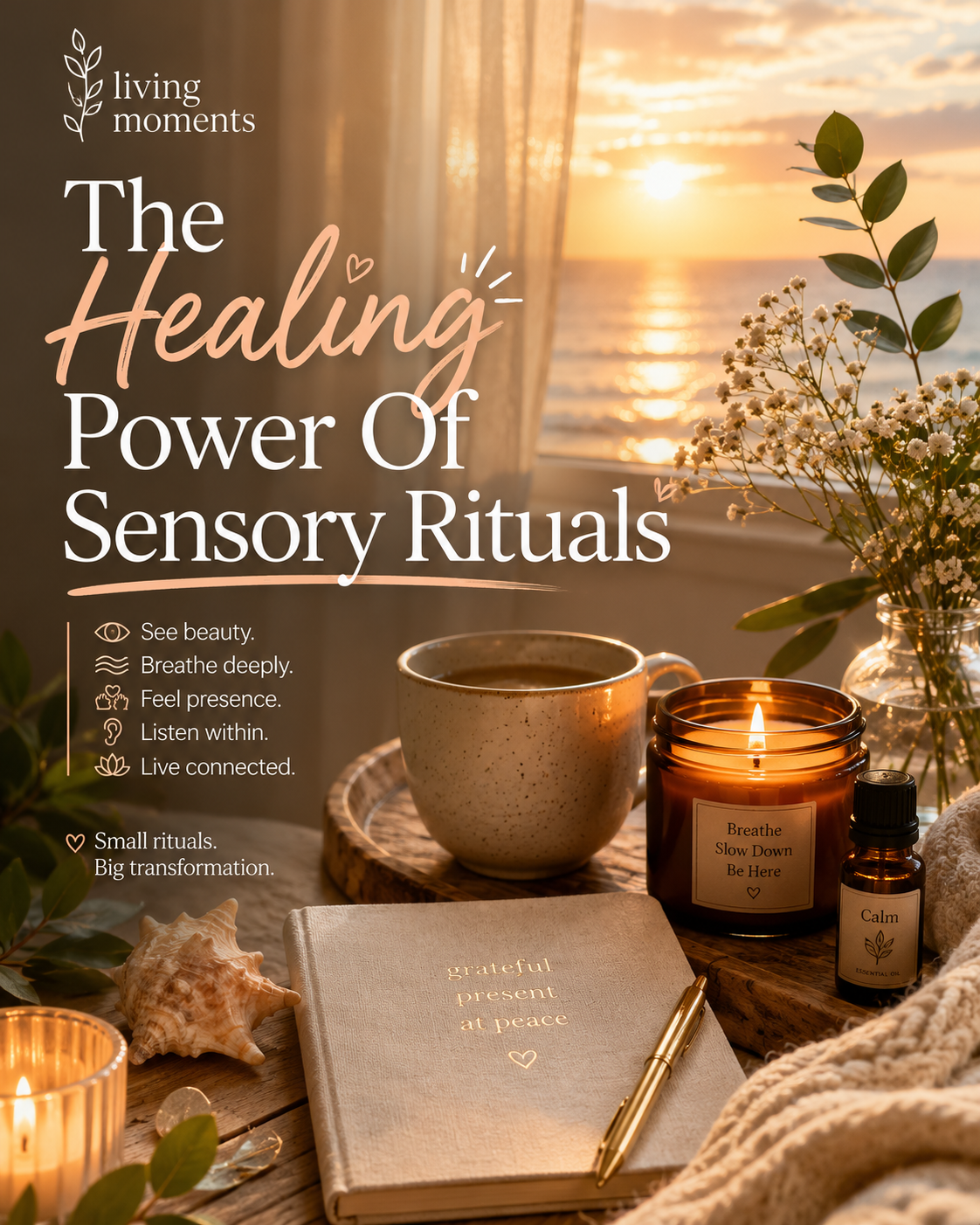
Candles As Emotional Regulation
Lighting a candle may seem simple.
But rituals create psychological safety.
A warm glow in a dim room tells the brain:
“You can slow down now.”
Soft lighting reduces overstimulation and creates a calming transition away from the intensity of screens and bright artificial light.
Scented candles add another layer of nervous system support through aromatherapy.
Certain aromas may help create feelings of:
- calmness,
- grounding,
- emotional comfort,
- focus,
- or relaxation.
A home can become a healing environment through small sensory details.
Aromas & Memory
Scent is deeply connected to the limbic system — the emotional and memory center of the brain.
This is why certain aromas instantly change how we feel.
Lavender may soften anxiety.
Vanilla may feel comforting.
Lemongrass may increase focus.
Citrus scents may create mental clarity and lightness.
Aromatherapy is not just aesthetic.
It’s neurological.
Food Can Also Regulate The Nervous System
Nourishment affects emotional stability more than most people realize.
Warm meals, calming teas, balanced snacks, and comforting foods can help the body feel grounded and emotionally supported.
Tea rituals, slow breakfasts, or mindful dinners create moments where the nervous system finally pauses.
Not rushed.
Not distracted.
Present.
Sometimes healing begins by eating slowly enough for the body to realize it is safe.
Music, Yoga & The Return To The Body
Soft music changes emotional states.
Yoga releases stored physical tension.
Breathwork slows internal urgency.
These practices reconnect people with their bodies after long periods of stress, burnout, or emotional disconnection.
Especially restorative yoga and slow movement practices that encourage the nervous system to soften instead of perform.
The goal is not perfection.
The goal is regulation.
Journaling Creates Emotional Space
Many people carry emotions without processing them.
Journaling creates a quiet space where thoughts leave the nervous system and move onto paper.
This may help reduce mental overstimulation and emotional accumulation.
Sometimes the body relaxes simply because it no longer has to hold everything internally.
Healing Does Not Always Need To Be Loud
There is healing in:
low lighting,
a calming scent,
slow music,
tea before bed,
soft yoga stretches,
quiet mornings,
writing thoughts down,
and creating spaces that feel emotionally safe.
Small rituals repeated consistently teach the body a new experience:
life is not always an emergency.
Living Moments: Creating Rituals That Feel Like Home
The beauty of sensory rituals is that they transform ordinary moments into emotional care.
A candle is no longer just decor.
Tea becomes presence.
Yoga becomes regulation.
Soft lighting becomes safety.
This is the essence of Living Moments:
creating rituals that help people reconnect with calmness, softness, and themselves again.
Because sometimes healing starts with something incredibly simple:
a quiet room,
a gentle aroma,
and finally allowing the nervous system to rest.
