
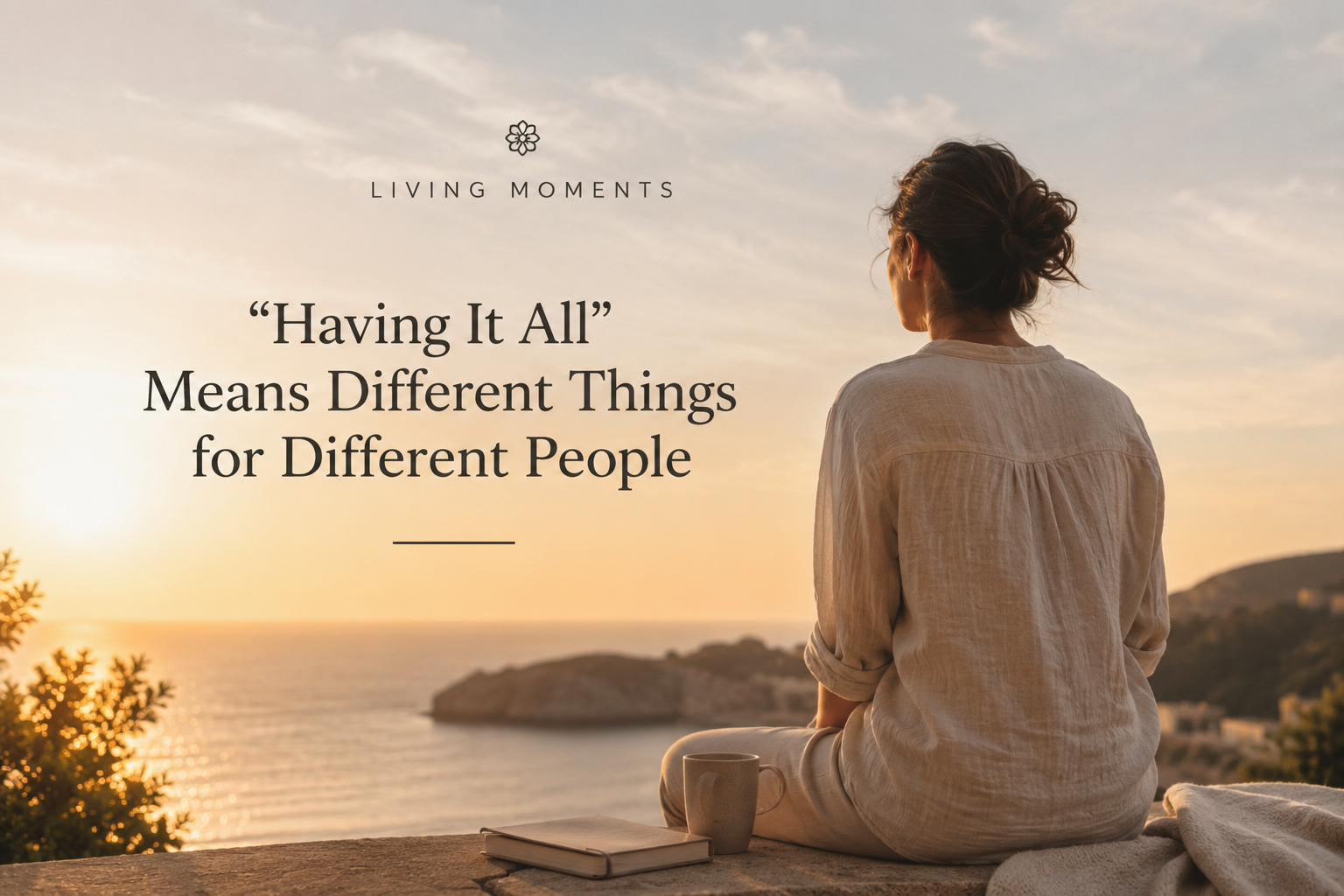
Modern society often sells a very specific version of success:
perfect career,
perfect relationship,
perfect body,
constant productivity,
luxury experiences,
financial abundance,
social validation.
But the truth is:
“having it all” is deeply subjective.
For some people, it means building a successful company.
For others, it means having peace of mind after years of anxiety.
For some, it means traveling the world.
For others, it means finally feeling safe at home.
For some, it is wealth.
For others, it is health, time, freedom, love, spirituality, nature, family, creativity, or simply waking up without emotional exhaustion.
There is no universal definition of fulfillment.
And trying to live according to someone else’s definition often creates silent suffering.
The Pressure of Modern Comparison
Social media has amplified comparison in ways the human nervous system was never designed to process constantly.
People compare:
- timelines,
- appearances,
- careers,
- relationships,
- financial status,
- healing journeys,
- lifestyles,
- happiness.
But comparison ignores context.
You rarely see:
- the burnout behind success,
- the loneliness behind achievement,
- the anxiety behind perfection,
- the sacrifices behind certain lifestyles.
Studies in psychology have shown that excessive social comparison is strongly associated with:
- lower self-esteem,
- increased anxiety,
- depressive symptoms,
- dissatisfaction with life.
Researchers from the American Psychological Association and studies published in journals like Computers in Human Behavior have repeatedly connected social media comparison with reduced emotional well-being.
The nervous system begins to feel like it is always “behind.”
Even when life is already meaningful.
Gratitude Changes Brain Chemistry
One of the most researched emotional practices in neuroscience is gratitude.
Not toxic positivity.
Not pretending pain does not exist.
Real gratitude:
the ability to recognize what is still good, safe, meaningful, or beautiful in the present moment.
Research from Harvard Medical School and the Greater Good Science Center suggests gratitude practices may help:
- reduce stress,
- improve sleep,
- increase emotional resilience,
- strengthen relationships,
- support mental health,
- improve overall life satisfaction.
Gratitude can also positively affect the nervous system by shifting attention away from chronic survival mode and toward emotional regulation.
The brain slowly learns to notice safety again.
Yoga Philosophy and the Idea of Enough
In yoga philosophy, suffering is often connected to attachment, constant craving, and identification with external validation.
One important concept is:
Santosha (Contentment)
Santosha is one of the Niyamas in yoga.
It teaches:
- inner contentment,
- appreciation for the present,
- peace that is not dependent on external perfection,
- gratitude without stagnation.
Santosha does not mean giving up ambition.
It means:
you can grow without constantly feeling incomplete.
You can desire more while still appreciating what already exists.
This balance is important for mental well-being because many people live trapped between:
“Who I am now is not enough.”
and
“I will only deserve peace once I achieve more.”
But peace postponed forever eventually becomes emotional exhaustion.
Having It All May Actually Mean Balance
Many people spend years chasing achievement while neglecting:
- health,
- sleep,
- relationships,
- emotional regulation,
- presence,
- spirituality,
- joy,
- rest.
Then eventually realize:
success without inner peace can still feel empty.
Studies on well-being increasingly show that long-term life satisfaction is usually connected less to status and more to:
- meaningful relationships,
- purpose,
- emotional connection,
- autonomy,
- physical and mental health,
- belonging,
- gratitude,
- balanced living.
In many cultures around the world, fulfillment is viewed differently:
Scandinavian cultures
often emphasize balance, simplicity, and quality of life over constant hustle.
Japanese philosophy
through concepts like Ikigai explores meaning, purpose, and sustainable living.
Yoga and Eastern traditions
often focus more on inner harmony than external accumulation.
Slow living movements
encourage intentionality instead of overstimulation and burnout.
You Are Allowed to Define Success for Yourself
A peaceful morning can be success.
Healing can be success.
Leaving survival mode can be success.
Creating art can be success.
Having dinner with people you love can be success.
Building a quiet life you no longer need to escape from can be success.
The problem is not ambition.
The problem is believing your life has no value until it looks impressive to others.
Small Gratitude Rituals That Support Emotional Well-Being
Simple rituals can help retrain attention toward presence and appreciation:
- morning sunlight without your phone,
- writing 3 things you are grateful for,
- mindful meals,
- evening walks,
- yoga and breathwork,
- spending time in nature,
- slow conversations,
- meditation,
- appreciating the body for what it does — not only how it looks,
- celebrating small progress.
These practices may seem small, but they help regulate overstimulation and reconnect people with emotional presence.
Final Reflection
Maybe “having it all” was never about owning everything.
Maybe it is about learning what truly matters to you.
Because a meaningful life is not always the loudest one online.
Sometimes it looks like:
peaceful mornings,
healthy boundaries,
safe relationships,
a regulated nervous system,
purposeful work,
moments of stillness,
gratitude for ordinary things,
and the ability to genuinely feel present in your own life.
And for many people —
that already is everything.
