
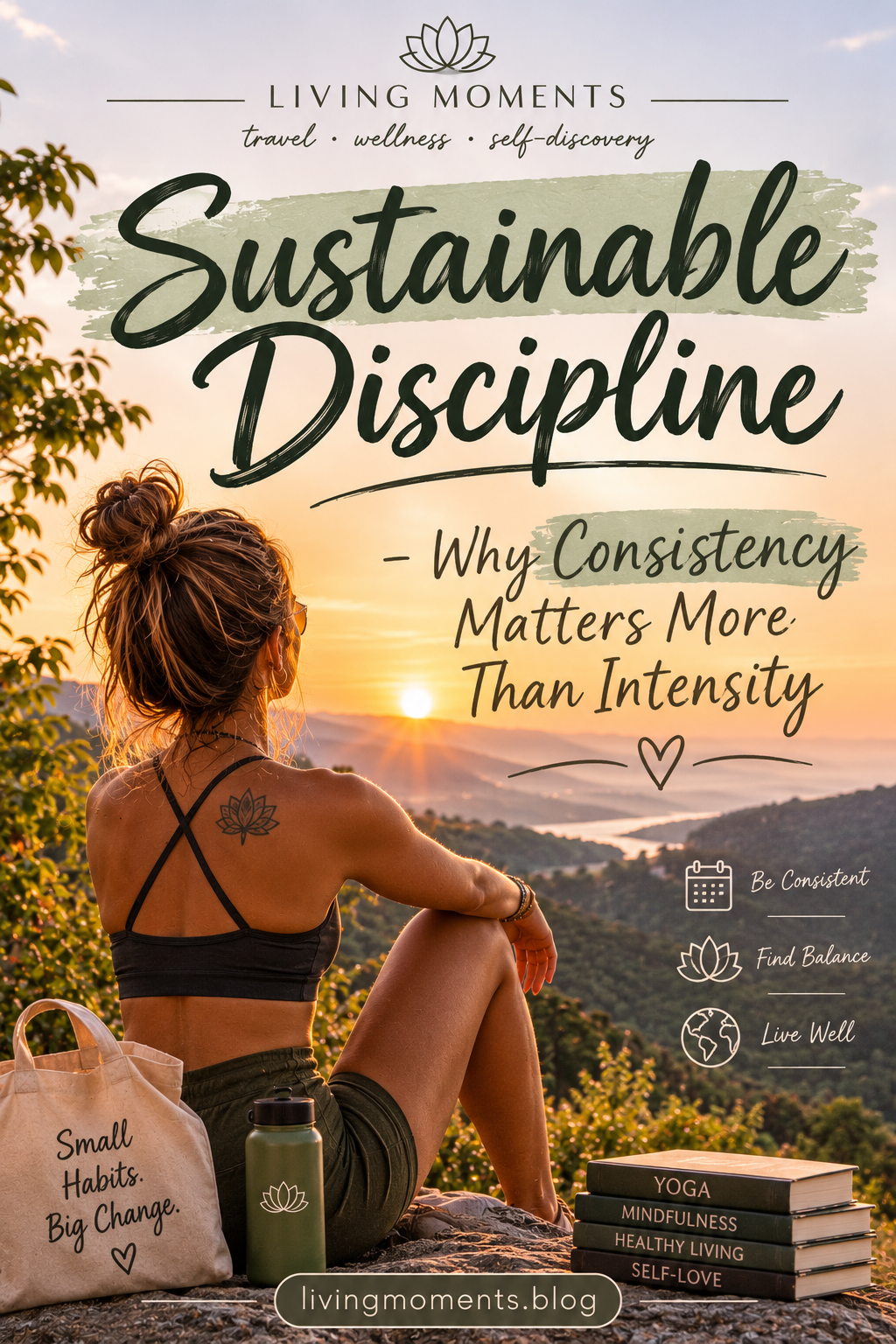
Why Consistency Matters More Than Intensity
Many people try to change their lives through extremes.
Extreme routines.
Extreme motivation.
Extreme productivity.
Extreme self-pressure.
For a few days, it feels powerful.
The motivation is high.
The energy feels intense.
The vision feels exciting.
And then, slowly, exhaustion appears.
The routine becomes difficult to maintain.
The nervous system becomes overwhelmed.
Perfectionism creates guilt.
Consistency disappears.
This is one reason so many people struggle with discipline:
they try to transform their lives too aggressively instead of sustainably.
But real transformation is rarely built through intensity alone.
It is built through repetition.
A life changes slowly before it changes visibly.
This is why sustainable discipline matters.
Not punishment.
Not obsession.
Not burnout disguised as ambition.
Sustainable discipline is gentle enough to continue long-term.
Because consistency matters more than intensity.
Psychology and neuroscience both show that habits form through repeated behavioral patterns over time.
The brain strengthens neural pathways through repetition.
The more consistently an action is repeated, the more automatic it becomes.
This is why tiny habits matter so much.
Small daily actions may feel insignificant in the moment, but they slowly shape identity, behavior, and even emotional patterns.
A five-minute walk.
One healthy meal.
Stretching consistently.
Reading one page.
Writing for ten minutes.
Going to sleep earlier.
Breathing deeply before reacting emotionally.
These actions seem small.
But repeated consistently, they reshape the nervous system and reinforce self-trust.
One important concept connected to sustainable discipline is dopamine regulation.
Dopamine is often misunderstood as simply the “pleasure chemical,” but it is deeply connected to motivation, reward anticipation, learning, and behavior repetition.
Extreme routines can create temporary dopamine spikes:
intense motivation,
rapid goal chasing,
constant stimulation,
and unrealistic expectations.
But these spikes are difficult to maintain long-term.
Eventually the brain becomes exhausted by extremes.
Research suggests that small consistent actions activate reward systems more sustainably than intense cycles of overexertion and collapse.
In other words:
the brain responds better to stability than chaos.
This is one reason slow progress often lasts longer.
The nervous system thrives through rhythm and predictability.
Consistency creates emotional safety.
And emotional safety makes long-term habits easier to maintain.
Another powerful idea in psychology is identity-based habits.
People often focus only on outcomes:
losing weight,
becoming productive,
being successful,
changing their lives.
But long-lasting habits usually form when behaviors become connected to identity.
Not:
“I am trying to meditate.”
But:
“I am someone who takes care of my mind.”
Not:
“I am trying to become healthy.”
But:
“I am someone who values my body.”
Identity shifts create behavioral consistency because actions begin aligning with self-perception.
This changes discipline completely.
Discipline stops feeling like constant self-force.
It becomes self-relationship.
This is also why self-compassion matters more than people realize.
Many people abandon routines after one difficult day because they believe perfection is required.
But sustainable discipline leaves room for being human.
Missing one workout does not erase progress.
One emotional day does not destroy growth.
Resting does not mean failure.
What matters is returning gently instead of giving up completely.
The healthiest routines are flexible enough to survive real life.
Nature itself grows slowly.
Trees do not rush their growth.
Seasons do not compete with each other.
The body heals gradually.
Even the brain changes through repeated adaptation over time.
Everything sustainable in nature follows rhythm instead of urgency.
Humans are not different.
A peaceful routine repeated consistently will usually transform a life more effectively than short periods of extreme motivation.
Because a life built slowly often lasts longer.
And maybe discipline was never supposed to feel like punishment.
Maybe true discipline is simply learning how to care for your future self repeatedly,
patiently,
and consistently.
Reflection
What small habit could you repeat consistently without exhausting yourself?
Not perfectly.
Just sustainably.
Quote
“A life built slowly often lasts longer.”
— Living Moments
