
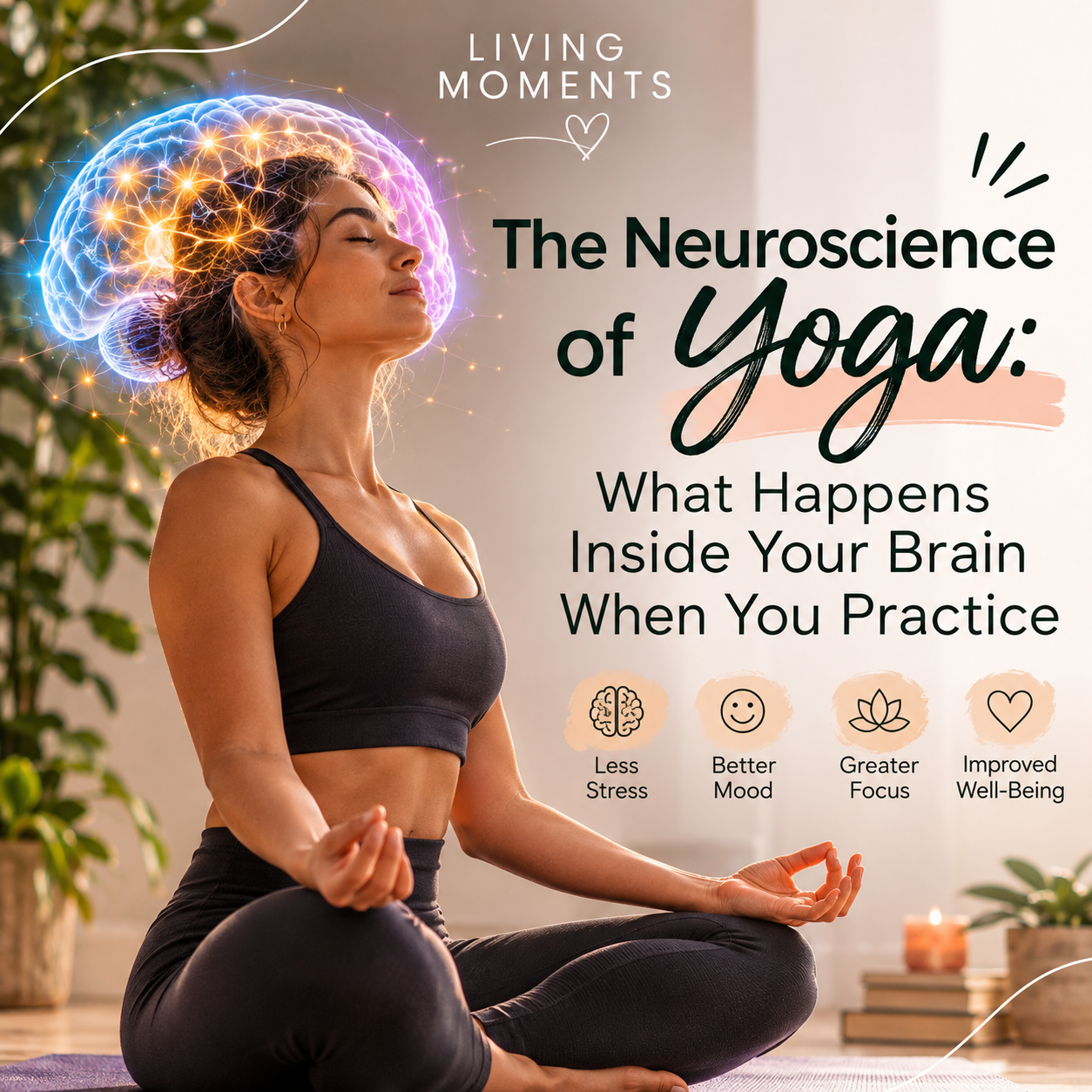
For thousands of years, yoga has been practiced as a pathway toward balance between body, mind, and spirit.
Modern neuroscience is now revealing something fascinating:
Many of the benefits traditionally associated with yoga can actually be observed inside the brain and nervous system.
From reducing stress hormones to improving emotional regulation, yoga creates measurable changes that influence how we think, feel, and respond to life.
The practice is far more than stretching.
It is a form of nervous system training.
Yoga and the Nervous System
The human nervous system operates largely through two states:
Sympathetic Nervous System
Often called the “fight-or-flight” response.
When activated, the body prepares for survival:
- increased heart rate
- elevated cortisol
- heightened alertness
- muscle tension
- faster breathing
This system is essential for survival but becomes problematic when activated continuously through modern stress.
Parasympathetic Nervous System
Known as the “rest-and-digest” system.
When active, the body can:
- recover
- heal
- digest properly
- lower blood pressure
- regulate emotions
- conserve energy
One of yoga’s most powerful effects is its ability to activate the parasympathetic nervous system.
This shift signals safety to the brain.
And safety changes everything.
The Vagus Nerve Connection
One of the most important structures involved in yoga’s benefits is the vagus nerve.
The vagus nerve connects the brain to major organs throughout the body and plays a crucial role in regulating:
- heart rate
- breathing
- digestion
- immune response
- emotional regulation
Many yoga practices naturally stimulate vagal activity through:
- slow breathing
- chanting
- humming
- meditation
- mindful movement
Researchers often associate higher vagal tone with:
- emotional resilience
- lower anxiety
- improved stress recovery
- better overall health
In simple terms:
A healthier vagus nerve helps the body recover from stress more efficiently.
Yoga Changes Brain Structure
Neuroimaging studies have discovered that long-term yoga practitioners often show structural differences in key brain regions.
The Prefrontal Cortex
This area is involved in:
- decision-making
- focus
- self-control
- emotional regulation
Regular yoga practice appears to strengthen activity in this region.
This may explain why many practitioners report feeling calmer and more thoughtful when facing challenges.
The Amygdala
The amygdala acts as the brain’s alarm system.
It detects threats and initiates fear responses.
Studies suggest that mindfulness and yoga practices may reduce excessive amygdala activation.
As a result:
People often experience less reactivity and greater emotional stability.
The Hippocampus
The hippocampus plays a major role in learning and memory.
Chronic stress can shrink this area over time.
Research indicates that meditation and yoga may help preserve hippocampal volume and support cognitive function.
The Science of Breath
Breathing is one of the few bodily functions we can consciously control.
This makes it a powerful bridge between body and brain.
Many yoga breathing techniques involve:
- slower breathing rates
- deeper diaphragmatic breathing
- extended exhalations
Neuroscientists have found that slow breathing can:
- decrease stress hormones
- lower heart rate
- improve concentration
- regulate emotional responses
Some studies suggest that breathing around five to six breaths per minute can significantly enhance nervous system regulation.
This may be one reason why people often feel profoundly relaxed after yoga.
Yoga and Mental Health
Research continues to show promising results regarding yoga and psychological well-being.
Studies have associated regular practice with improvements in:
- anxiety symptoms
- depressive symptoms
- sleep quality
- emotional resilience
- perceived stress levels
Scientists believe these benefits arise from a combination of factors:
- physical movement
- breath regulation
- mindfulness
- increased body awareness
- social connection in group settings
Rather than targeting only the mind or only the body, yoga influences both simultaneously.
The Mind-Body Awareness Effect
Modern life often pulls attention outward.
Screens, notifications, deadlines, and constant stimulation can disconnect us from internal signals.
Yoga helps restore interoception.
Interoception refers to the brain’s ability to sense internal bodily states.
Examples include:
- heartbeat awareness
- breathing awareness
- hunger signals
- muscle tension
- emotional sensations
Higher interoceptive awareness has been linked to:
- emotional intelligence
- self-regulation
- resilience
- better decision-making
Yoga teaches us to listen again.
Why Stillness Feels So Powerful
Many people arrive at yoga expecting physical benefits.
Flexibility.
Strength.
Mobility.
Yet they often leave with something deeper.
A sense of calm.
A feeling of clarity.
A quieter mind.
Neuroscience suggests this is not imagination.
It is biology.
When movement, breath, and awareness work together, the brain receives repeated signals that the environment is safe.
The nervous system begins to soften.
The body releases tension.
The mind becomes less occupied with survival.
And in that space, something remarkable happens:
We become available to ourselves again.
Final Reflection
Yoga is not simply exercise.
It is a conversation between the brain, the body, and the nervous system.
Every breath, every posture, and every moment of awareness sends information throughout the body.
Over time, these signals can reshape stress responses, strengthen emotional resilience, and cultivate a greater sense of inner balance.
Perhaps this is why yoga has endured for thousands of years.
Long before neuroscience could explain it, people already knew:
Sometimes healing begins by slowing down enough to listen.
