
For a long time, I believed being “healthy” meant becoming extremely disciplined.
Perfect routines.
Perfect eating habits.
Perfect workouts.
Perfect consistency.
But honestly?
That version of wellness always made me feel exhausted.
Because real life is not lived inside perfectly curated morning routines.
Real life is busy.
Emotional.
Unpredictable.
Messy sometimes.
And maybe the healthiest habits are not the most extreme ones.
Maybe they are simply the ones that feel realistic enough to continue consistently.
Wellness Should Feel Supportive — Not Punishing
Modern wellness culture often makes health feel overwhelming.
Drink this.
Avoid that.
Wake up earlier.
Train harder.
Optimize everything.
And slowly, wellness stops feeling healing and starts feeling like pressure.
But sustainable health usually looks much simpler than social media makes it seem.
Sometimes wellness is:
drinking more water,
walking daily,
sleeping better,
stretching your body,
making a simple healthy snack,
moving gently,
learning how to slow down emotionally.
Not every healthy habit needs to completely transform your life overnight.
The Problem With “All or Nothing” Wellness
Psychologists often talk about “all-or-nothing thinking” — the idea that if we cannot do something perfectly, we feel like we are failing completely.
This mindset destroys consistency.
Because people believe:
if they miss one workout,
eat one unhealthy meal,
skip one routine,
or lose motivation temporarily…
they failed.
But health is not built through perfection.
It is built through repetition.
Small habits repeated consistently matter more than short periods of extreme motivation.
Why Simple Habits Work Better
The brain responds better to habits that feel manageable.
Research on behavior change shows that sustainable routines are more likely to stick when they feel realistic, emotionally rewarding, and easy to repeat.
Which means:
a short walk daily may be more effective long term than forcing extreme workouts you hate.
Small habits create less nervous system resistance.
And consistency changes the body and mind much more than intensity performed temporarily.
Mug Cakes, Comfort, and Balance
One thing I stopped believing in is the idea that healthy living must feel restrictive all the time.
Food should nourish your body emotionally too.
Sometimes wellness looks like:
protein mug cakes,
simple balanced meals,
tea during winter evenings,
warm comfort foods,
slow breakfasts,
healthy snacks that actually taste good.
Balance creates sustainability.
And sustainability creates consistency.
Walking Is Underrated
Walking became one of the healthiest habits in my life because it never felt overwhelming.
It felt grounding.
Walking helps:
- reduce stress
- regulate the nervous system
- improve mental clarity
- support cardiovascular health
- reduce anxiety symptoms
- create emotional processing space
And psychologically, walking feels accessible.
You do not need perfect conditions to begin.
You simply move.
Yoga Helped Me Reconnect With Myself
Yoga was one of the first forms of movement that felt emotionally healing instead of emotionally exhausting.
Not because it changed my appearance dramatically.
But because it changed the way I experienced my body internally.
Breathing slower.
Stretching gently.
Releasing tension.
Feeling present again.
Research suggests yoga practices may help reduce stress hormones, improve nervous system regulation, support flexibility, and decrease anxiety symptoms.
And unlike toxic wellness culture, yoga invites softness instead of punishment.
Hydration Affects More Than People Think
One of the most overlooked wellness habits is simply drinking enough water.
Hydration affects:
energy,
focus,
mood,
sleep,
digestion,
skin health,
and even emotional regulation.
The body functions better when supported consistently through small basic habits.
Not only through extremes.
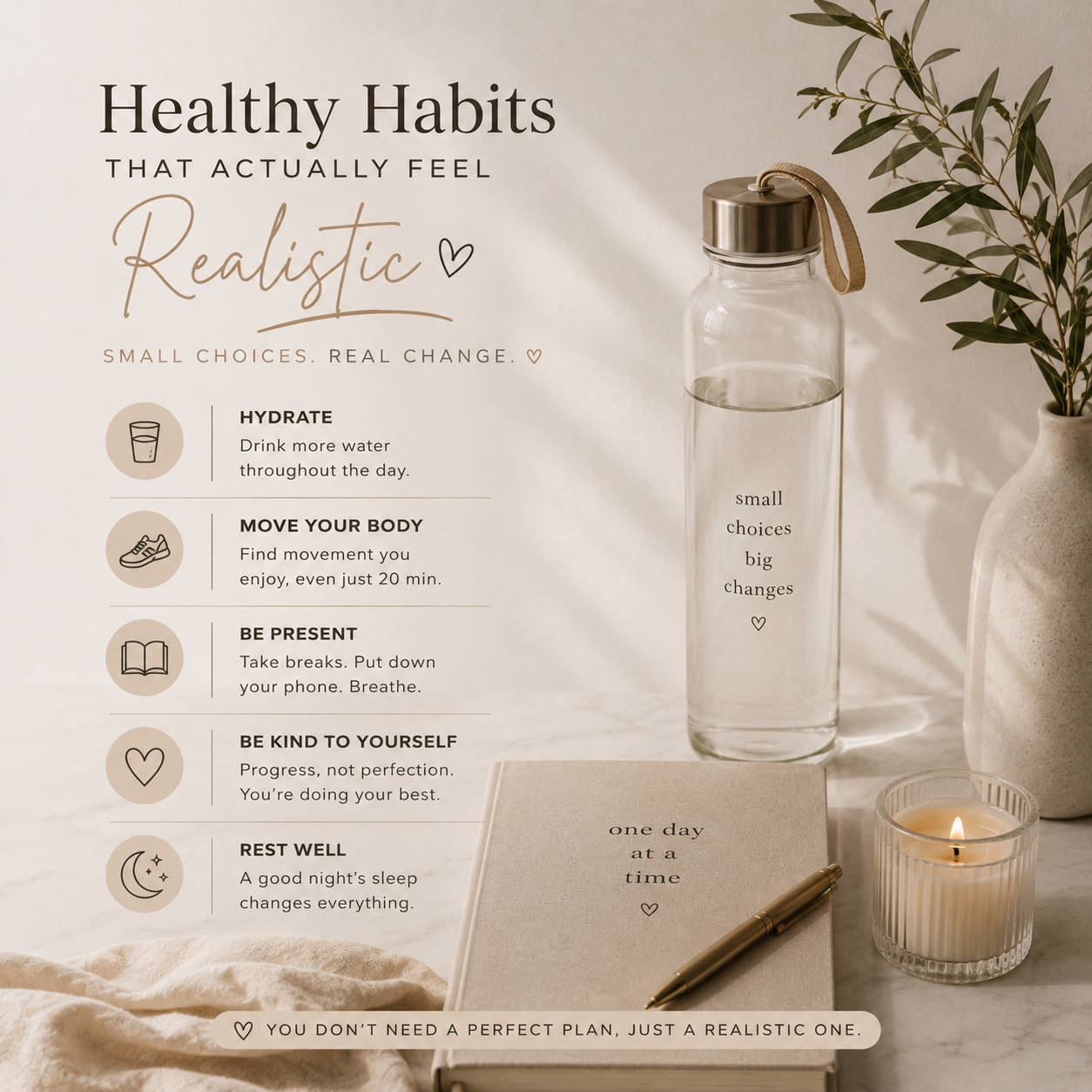
Healthy Habits Should Fit Your Real Life
The healthiest routines are usually the ones you can continue without emotionally draining yourself.
That may look like:
- a 20-minute walk
- yoga at home
- protein snacks
- drinking more water
- stretching before bed
- reducing screen time
- cooking simple nourishing meals
- slowing down your mornings
Small habits matter.
And they matter even more when they support your mental health too.
Wellness and Mental Health Are Connected
Your body and mind are not separate.
When the nervous system is constantly overwhelmed, even “healthy” routines can become emotionally exhausting.
This is why wellness should feel supportive.
Not obsessive.
Not controlling.
Not perfectionistic.
Real health includes:
rest,
flexibility,
gentleness,
emotional balance,
and realistic expectations too.
Wellness Products That Support Realistic Routines
For simple and balanced wellness support, I personally include products that fit naturally into real life instead of extreme routines.
Black Skull — Whey Protein and Supplements
Coupon code: LivingMoments
Because wellness should adapt to your life — not force your life to revolve around wellness.
Final Reflection
Maybe health becomes sustainable the moment we stop trying to build perfect routines.
Maybe wellness was never supposed to feel like pressure.
Maybe it is simply about supporting yourself more consistently,
more gently,
and more realistically.
One walk.
One stretch.
One healthy meal.
One calm morning.
One glass of water at a time.
