
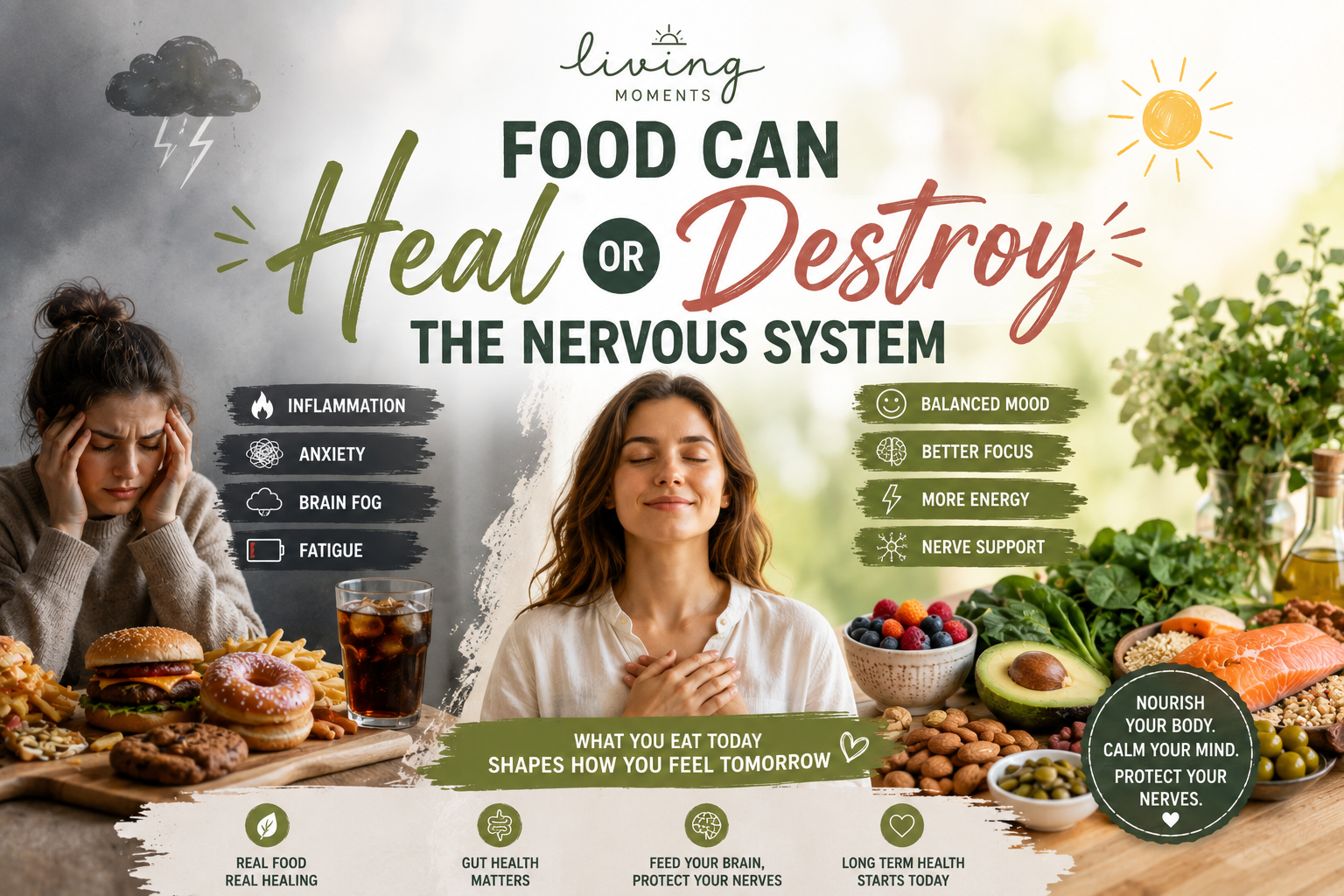
There’s a reason why emotional burnout often comes with sugar cravings, digestive issues, anxiety, and exhaustion.
The body keeps score — especially the nervous system.
Modern life has normalized overstimulation:
constant notifications,
rushed meals,
processed foods,
emotional stress,
and living in survival mode.
But what many people don’t realize is that food directly affects emotional regulation.
Not just physically.
Neurologically.
The Gut-Brain Axis: Why Your Stomach Affects Your Mood
Science now confirms the existence of the Gut-Brain Axis — the powerful communication system between the digestive system and the brain.
The gut produces neurotransmitters like serotonin and dopamine, both deeply connected to emotional stability, focus, motivation, and calmness.
When the gut is inflamed, overstressed, or constantly exposed to ultra-processed foods, the nervous system often reacts with:
- anxiety,
- irritability,
- emotional instability,
- fatigue,
- brain fog,
- compulsive eating patterns,
- and burnout symptoms.
Your body isn’t “failing.”
It’s communicating.
Ultra-Processed Foods & Nervous System Dysregulation
Many ultra-processed foods are designed to overstimulate the brain’s reward system.
High amounts of refined sugar, artificial ingredients, and inflammatory oils can increase cortisol levels and contribute to chronic inflammation.
Over time, this may impact:
- sleep quality,
- emotional resilience,
- stress tolerance,
- hormone balance,
- and even panic or anxiety symptoms.
Food becomes more than nutrition.
It becomes nervous system input.
And when life is already emotionally overwhelming, the body often craves quick dopamine instead of true nourishment.
Why Emotional Eating Happens
Compulsive eating is not always about lack of discipline.
Sometimes it’s the nervous system searching for regulation.
After emotional exhaustion, the brain naturally seeks comfort, stimulation, or temporary relief — especially through sugar and highly processed foods.
This is why healing your relationship with food isn’t about restriction.
It’s about safety.
The body feels calmer when it receives:
stable blood sugar,
protein,
healthy fats,
fiber,
minerals,
hydration,
and consistent nourishment.
Nourishment Should Feel Practical — Not Punishing
Healthy living doesn’t need to look extreme.
Especially during busy routines, travel days, emotional stress, or periods of burnout.
Sometimes nervous system support looks like:
- protein-rich low carb cakes,
- simple homemade meals,
- easy healthy snacks,
- warm drinks,
- balanced breakfasts,
- or choosing foods that sustain energy instead of draining it.
Wellness should adapt to real life.
Not create another impossible standard to chase.
Healing Through Small Daily Choices
A regulated nervous system is built slowly.
Through sleep.
Sunlight.
Movement.
Breathing.
Rest.
And also through food.
Not perfection.
Consistency.
Even while traveling.
Even during chaotic weeks.
Even when life feels emotionally heavy.
Because healing isn’t only emotional.
Sometimes healing starts in the gut.
And maybe the most loving thing we can do for ourselves is choosing nourishment that supports both the body and the mind.
Healthy food should fit real life — not create more stress.
